The owner
Needs to see the business without standing in the kitchen all day.
- Revenue and costs at a glance
- Labour costs she can control
- Less waste, same quality
- A busy weekend wiping out stock
- Hours creeping up unseen
- Decisions made on gut feel
Running a restaurant
on numbers, not instinct.


Demi’s is an owner-run Nigerian restaurant in London. When I came in as Product Lead in March 2026, the food was great but the numbers weren’t. Weekly revenue sat under £3,000, too much food was going in the bin, and nobody could really see how many hours staff were working, or what that was costing.
This one is a little different from my other case studies, because I didn’t spend most of it in Figma. I set the strategy, wrote the requirements and led the build of two internal tools, then paired them with new offers and marketing to bring people through the door. Design stayed lean so the tools could ship fast.
Growth wouldn’t stick while the kitchen was leaking money.
2 internal tools · 2 new offers · social, ads + influencers · Mar – Dec 2026
Any change had to work for three groups of people, and they wanted very different things.
Needs to see the business without standing in the kitchen all day.
Clock in, check stock, get on with service.
Need a reason to come in, and a reason to come back.
Every offer, ad and influencer campaign was tracked against visits and weekly revenue. If it worked, we kept it. If it didn’t, it went.
I led requirements and delivery here, not pixel-pushing. Four moves did most of the heavy lifting.

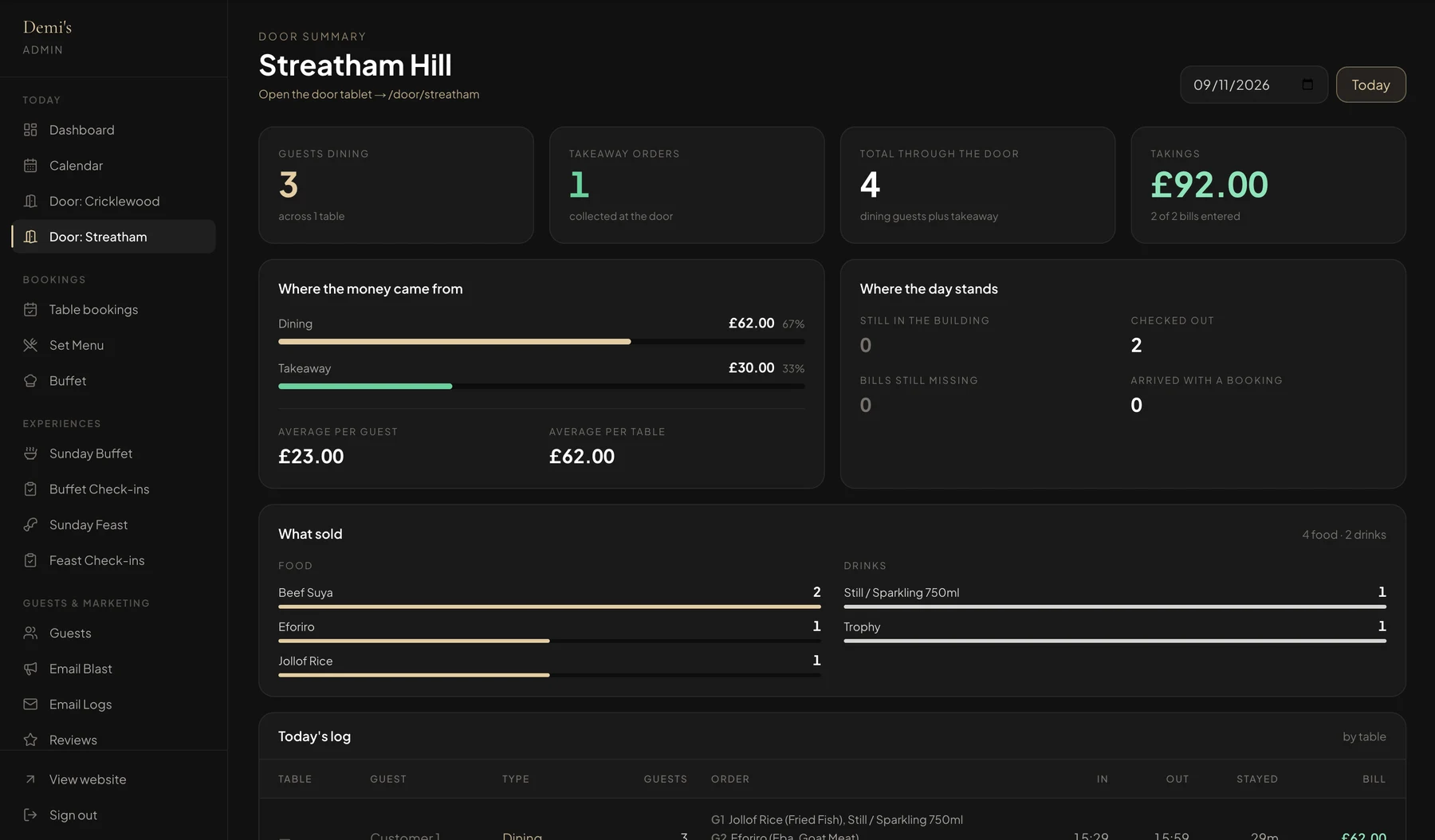
Before chasing more customers, I wanted to stop losing money on the ones we already had. I scoped and led the build of inventory tools so ordering followed what actually sold, and the door summary now shows exactly what sold each day. Food waste dropped 68.7%, which protected our margin as volume grew.

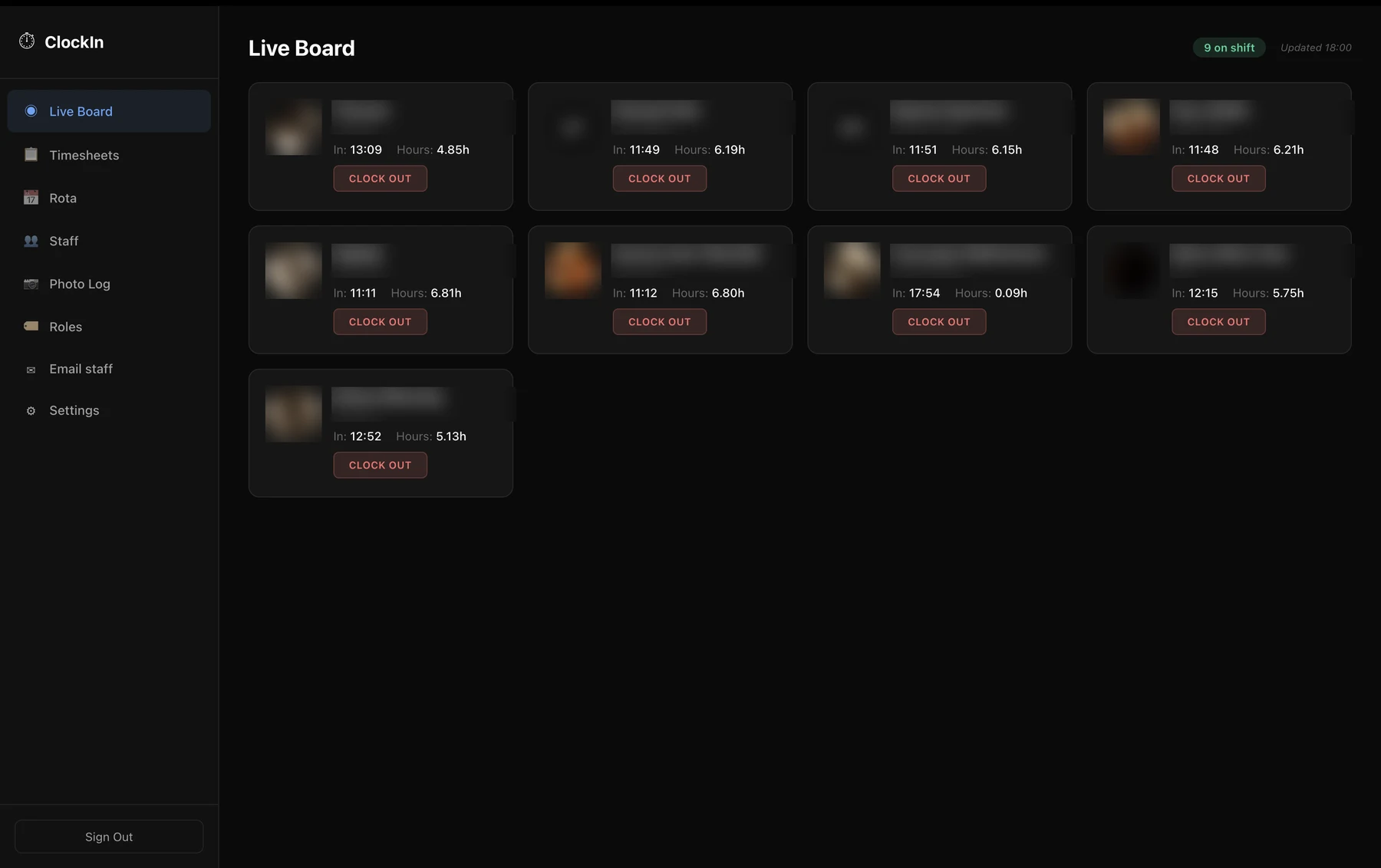
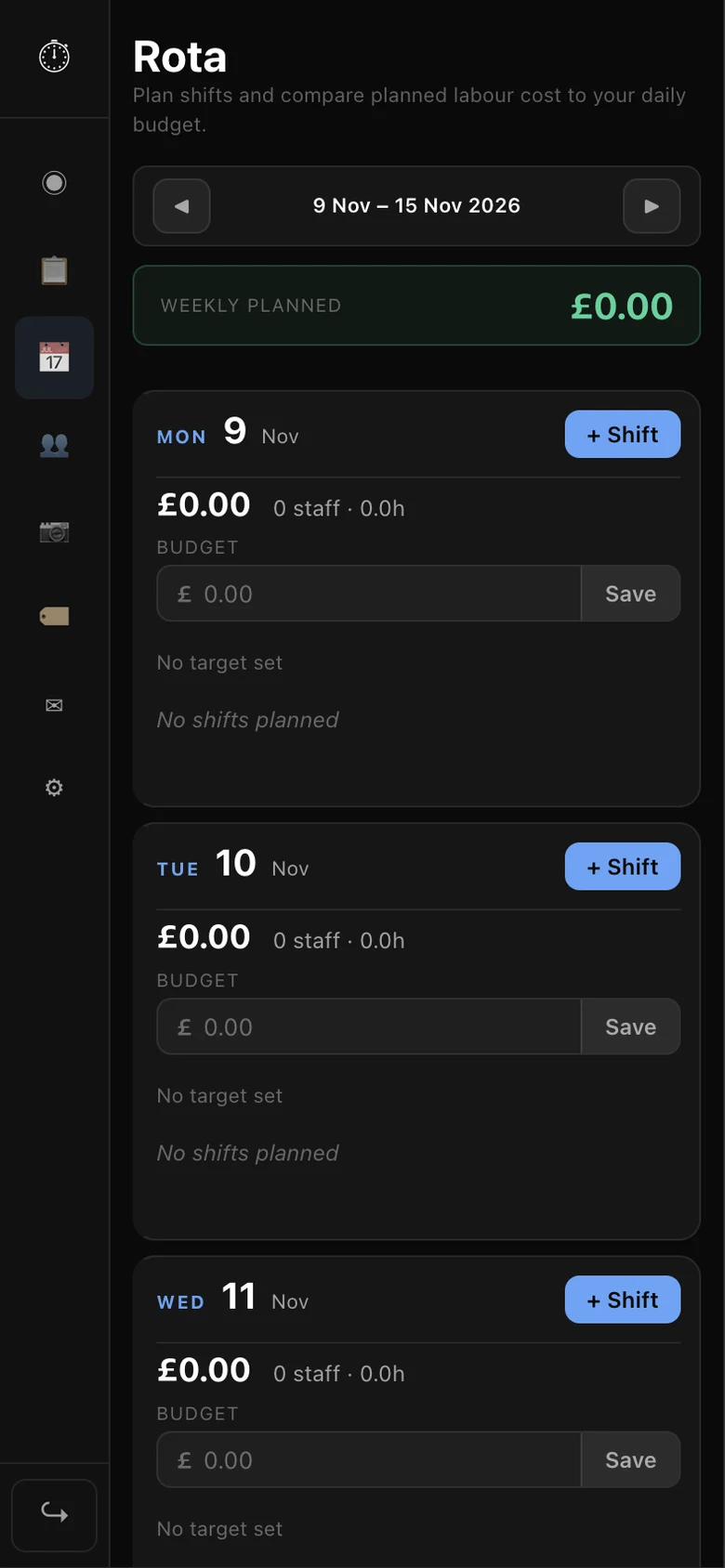
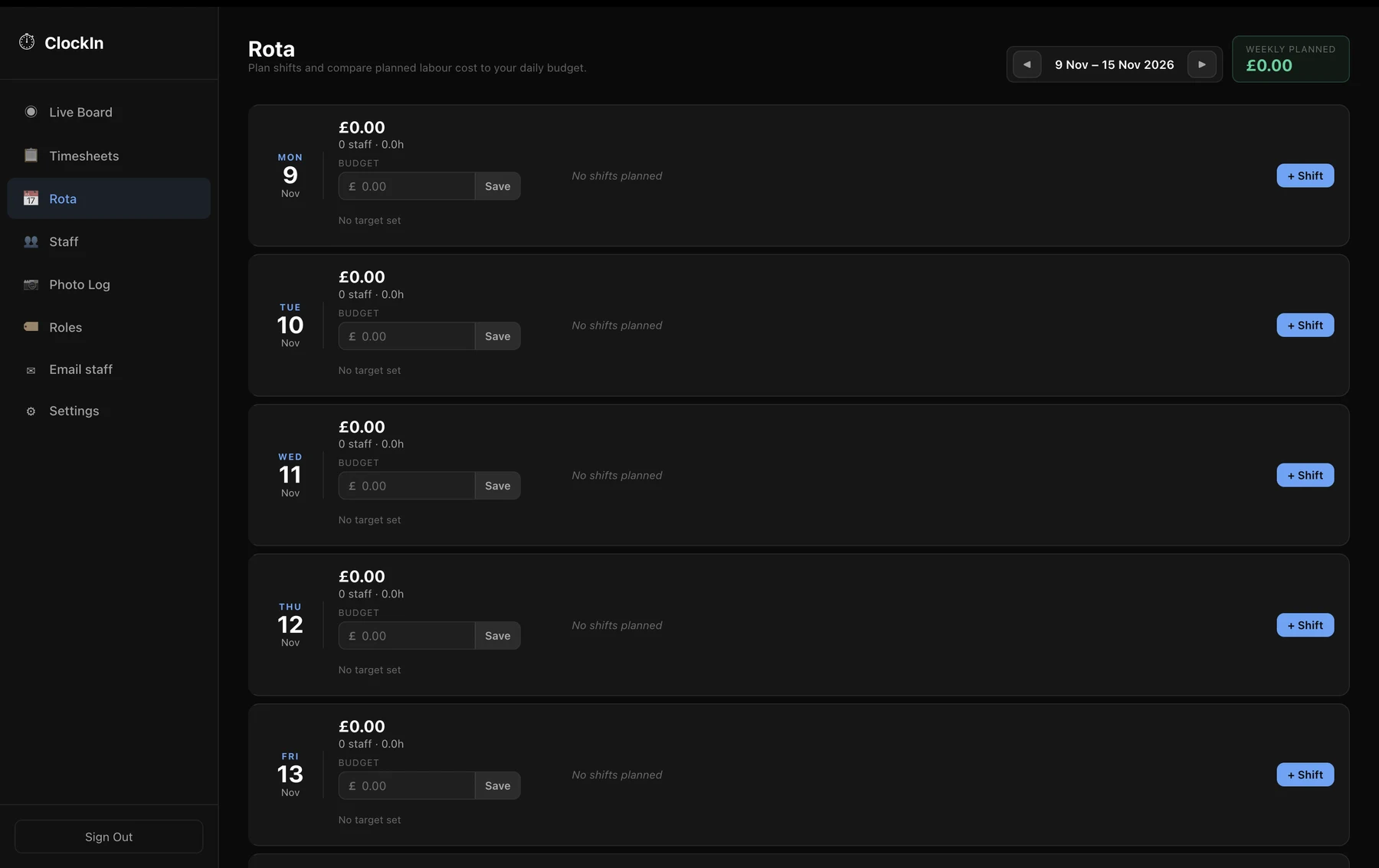
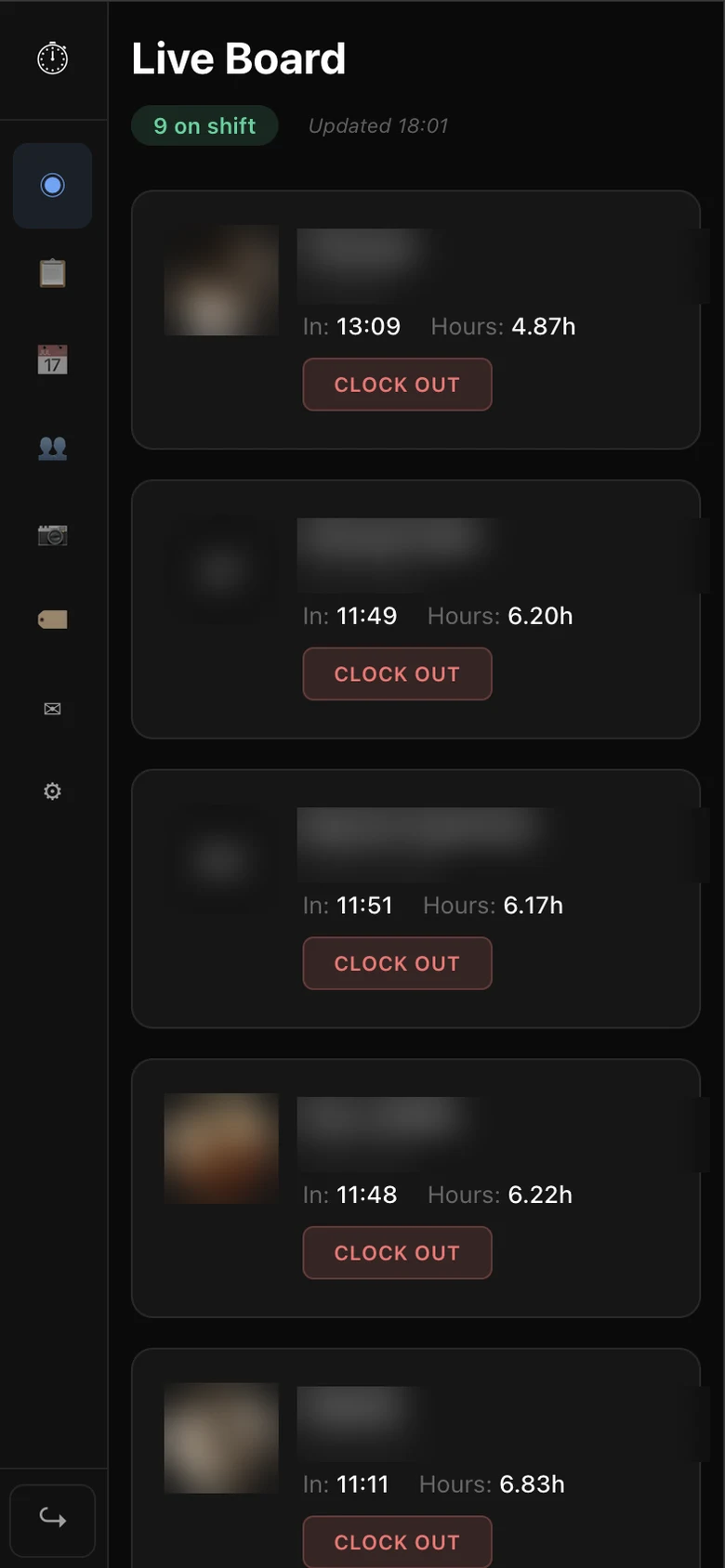
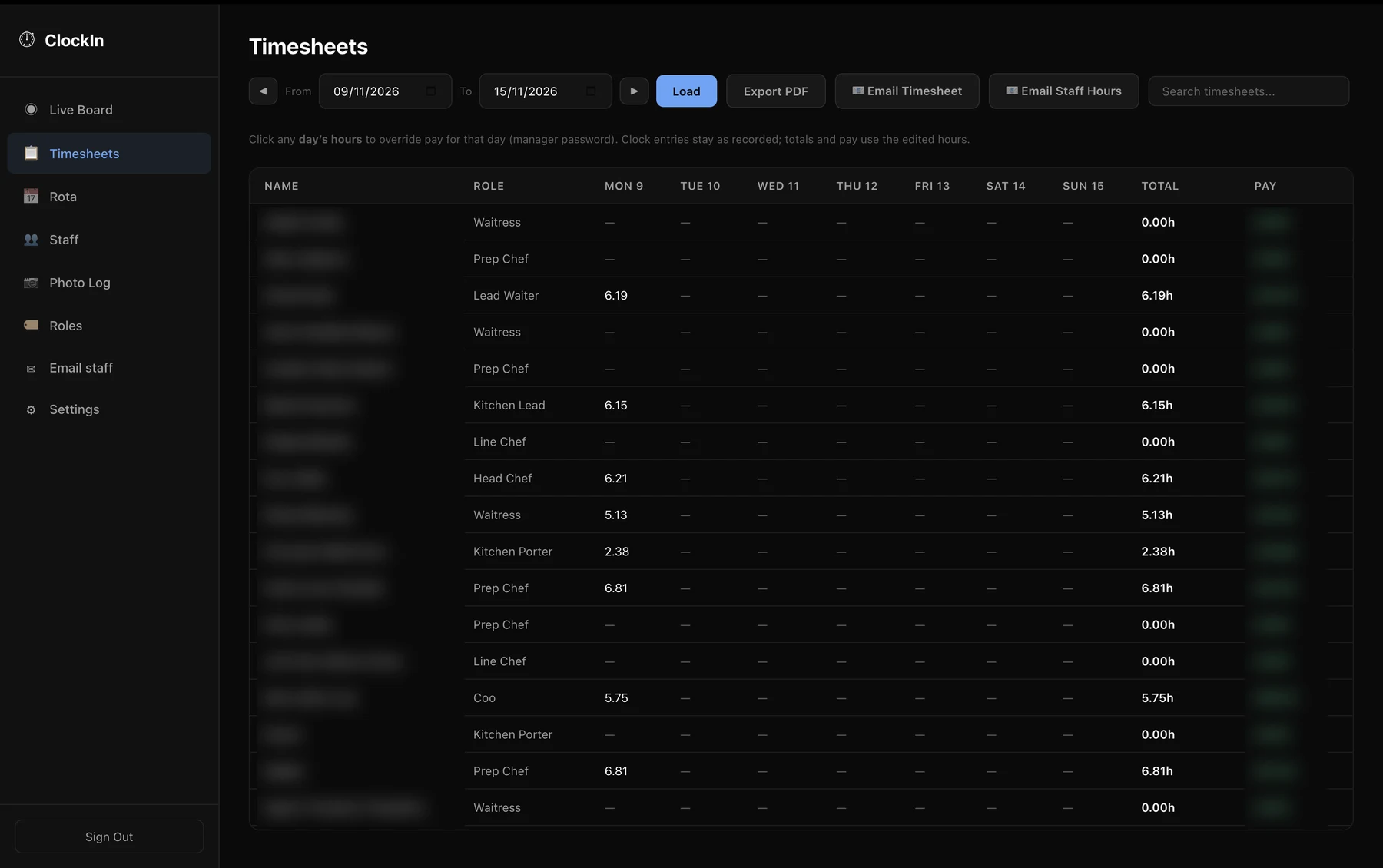
Hours were the biggest cost nobody could see. Staff clock in and out on ClockIn, the rota sits next to a daily labour budget, and timesheets work out pay for the owner. No more guessing what a shift cost.

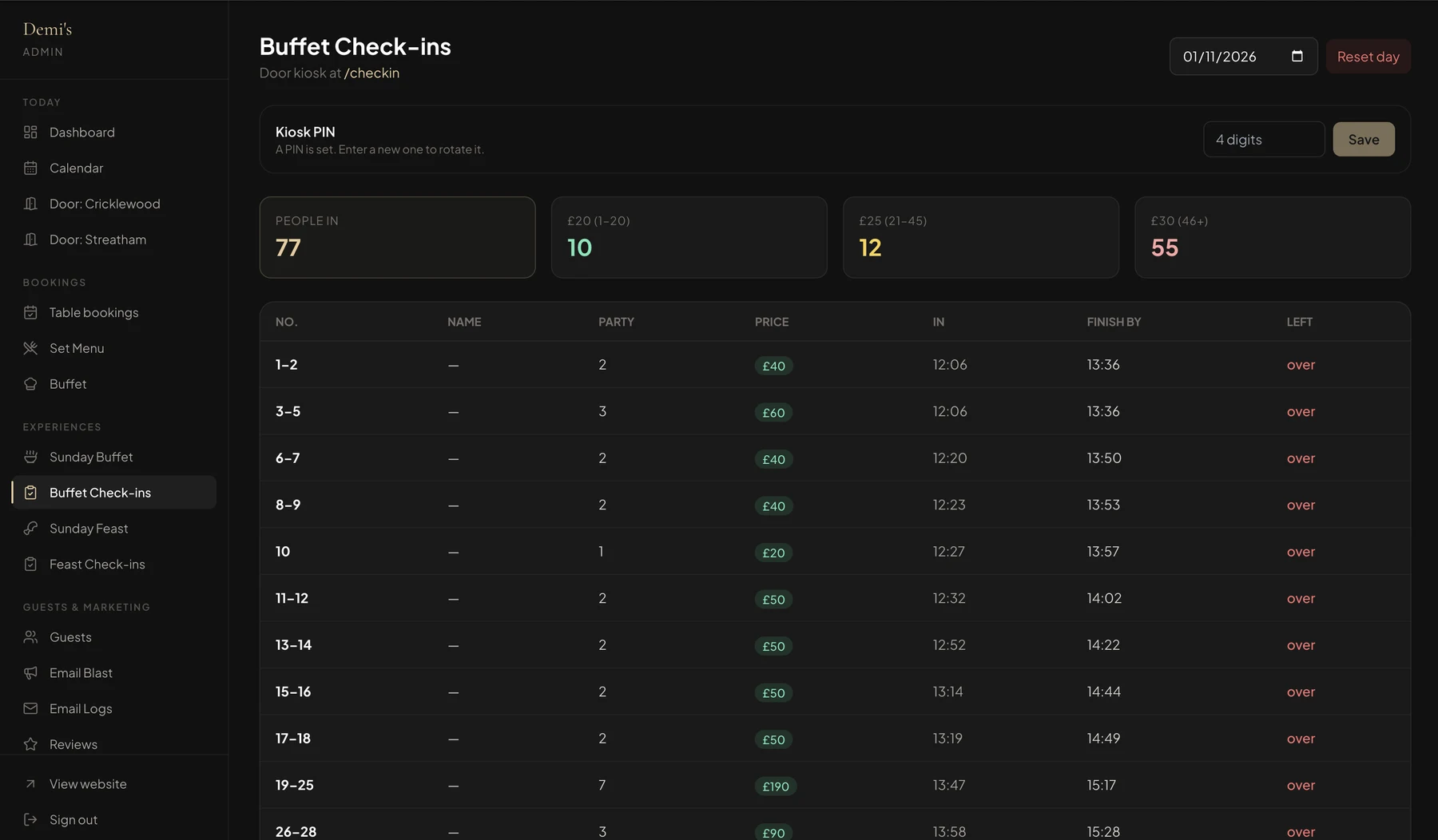
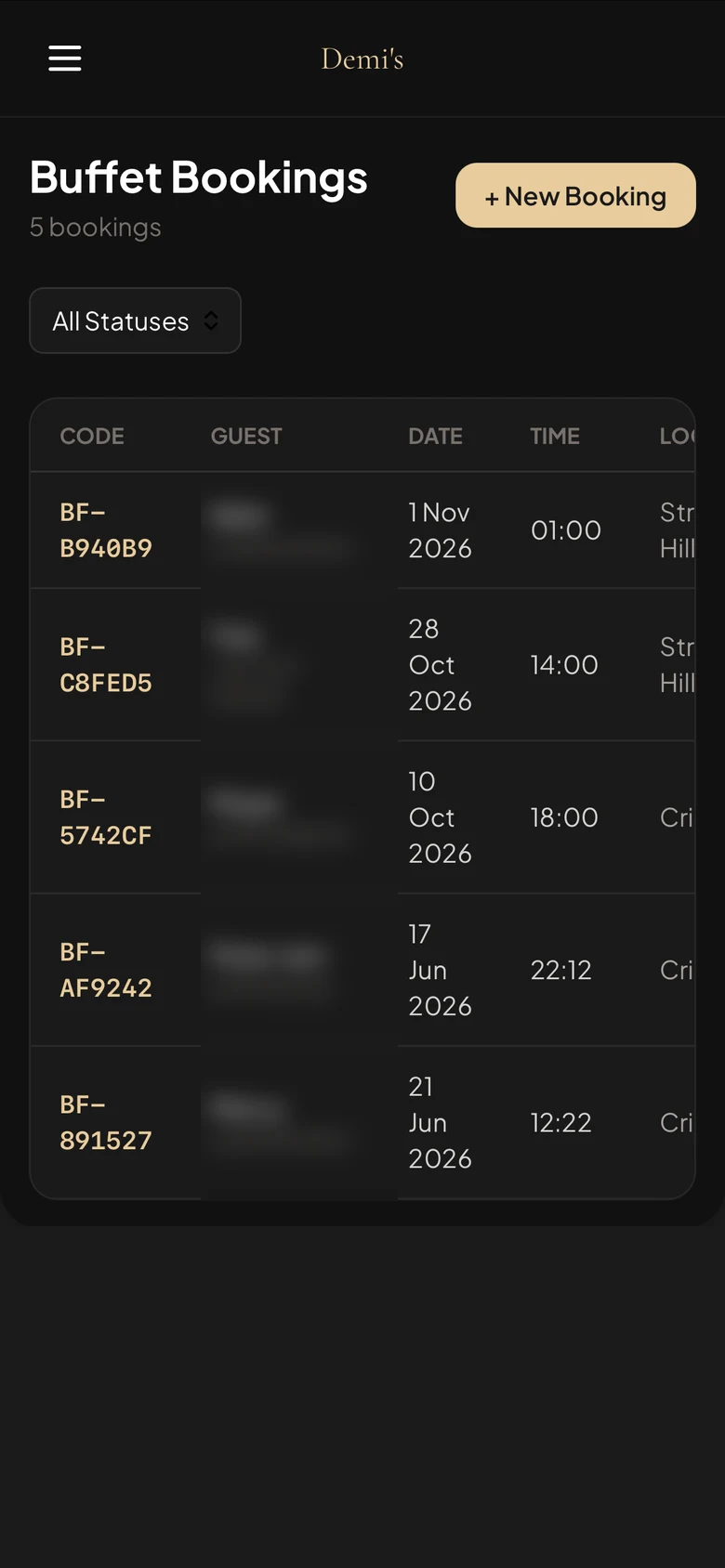
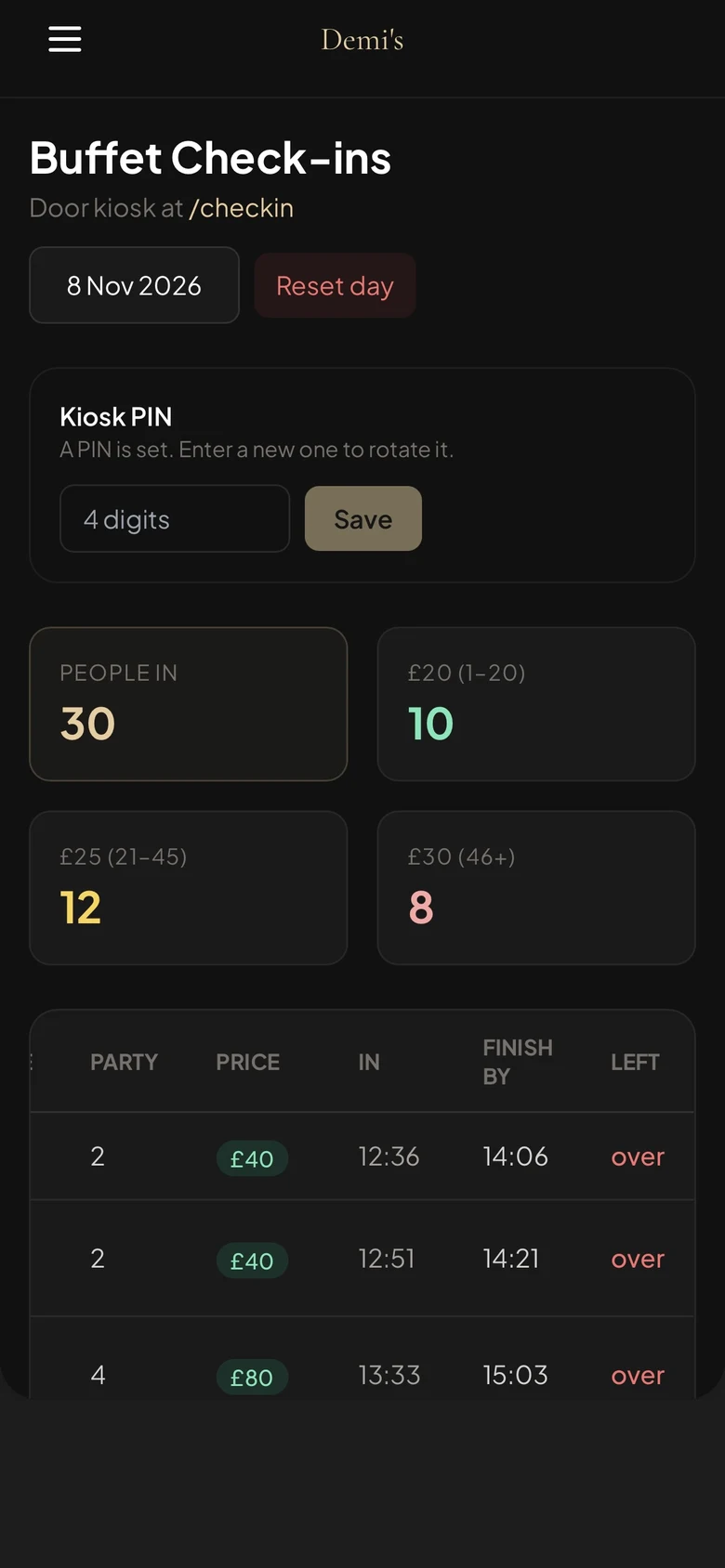
Discounts would have trained people to wait for a deal. Instead we launched a buffet and a brunch: new reasons for first-timers to come in, and for regulars to come back. A door kiosk checks buffet guests in and prices them by arrival time.

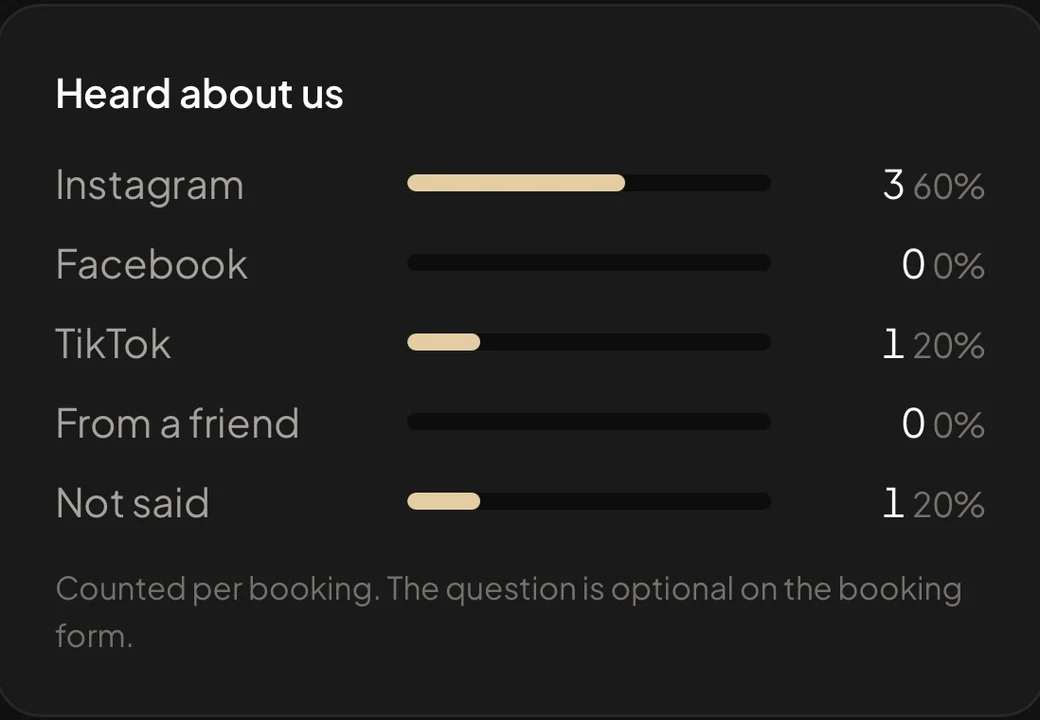
Each launch got social content, paid ads and influencer campaigns, and every one of them was tracked. Booking forms even ask how people heard about us. If a channel didn’t fill tables, the budget moved.


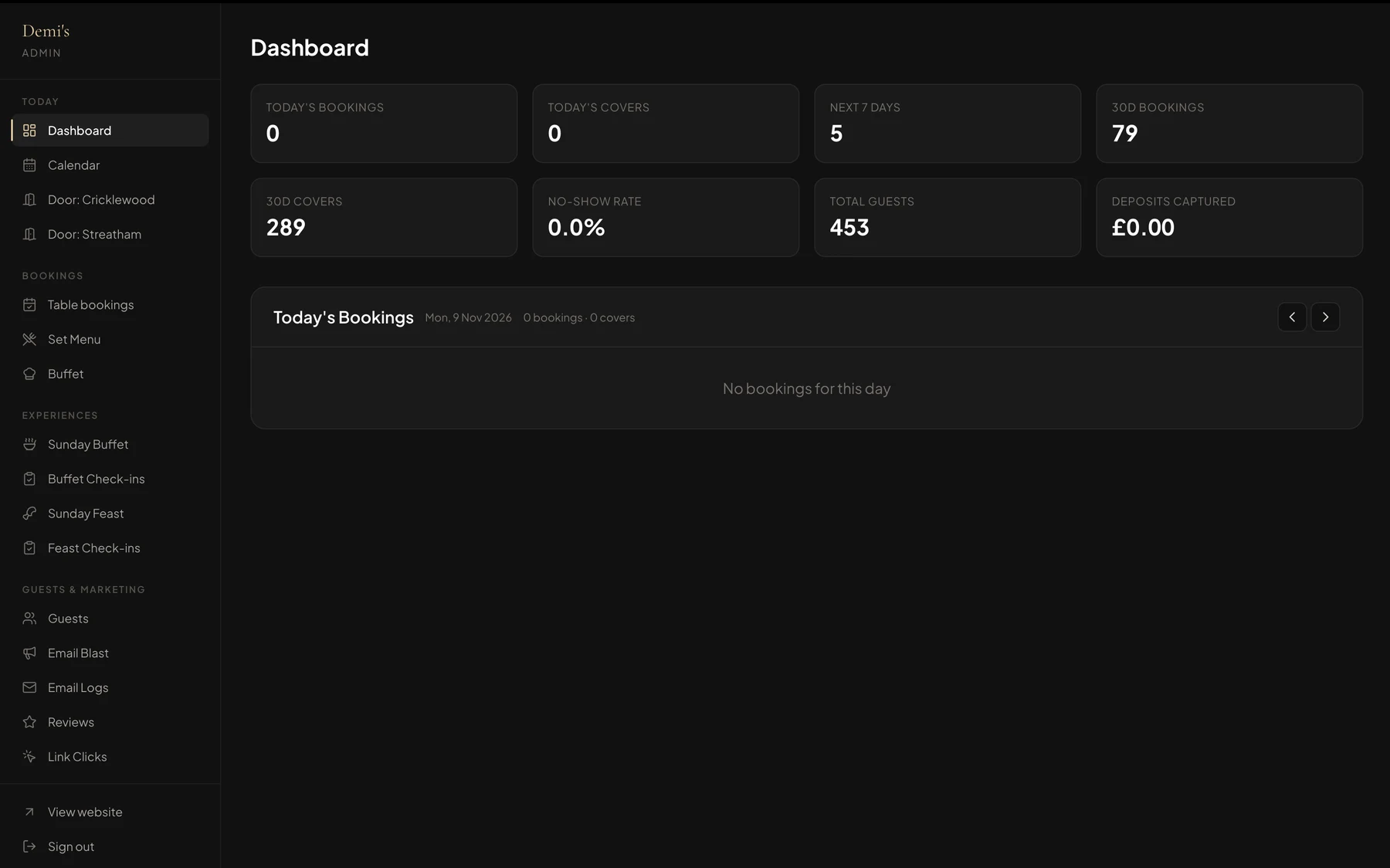
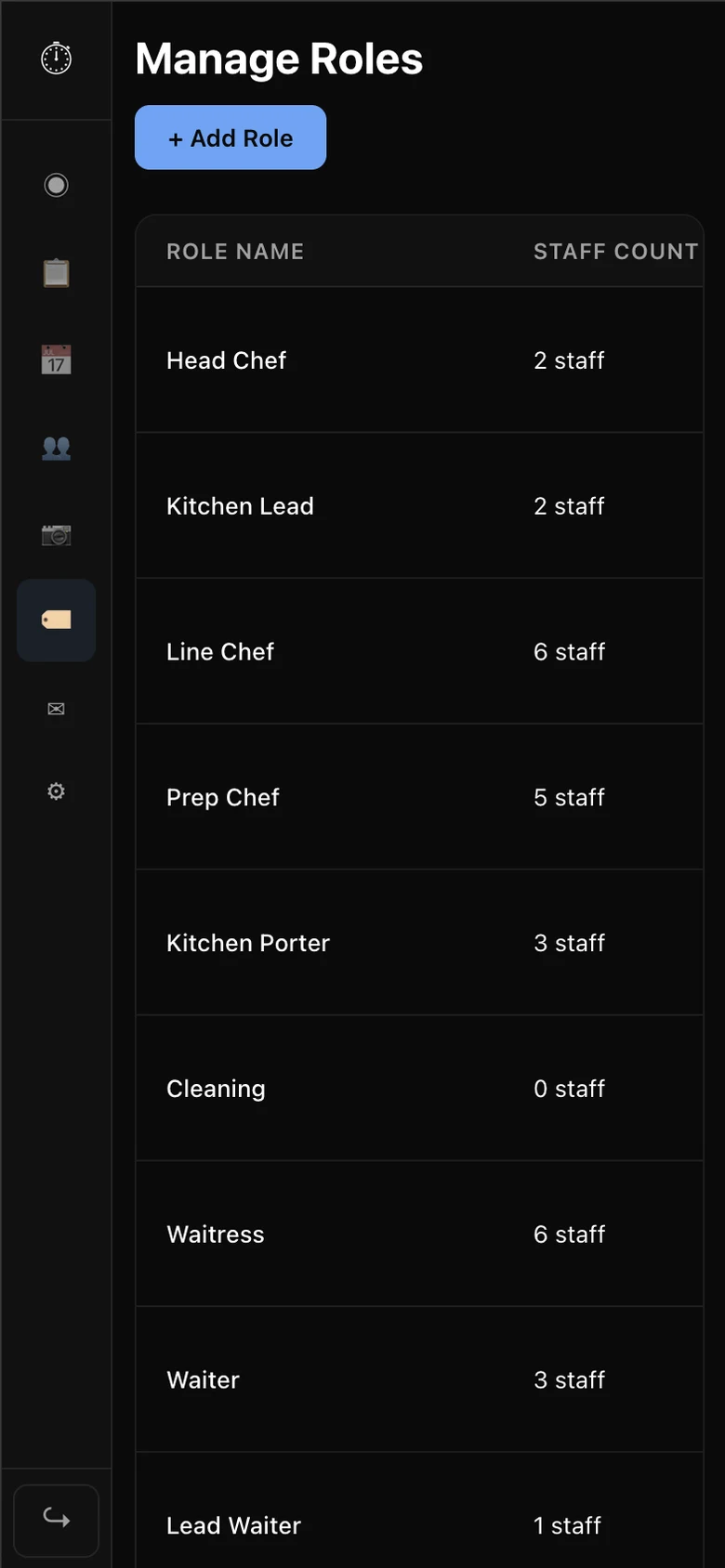
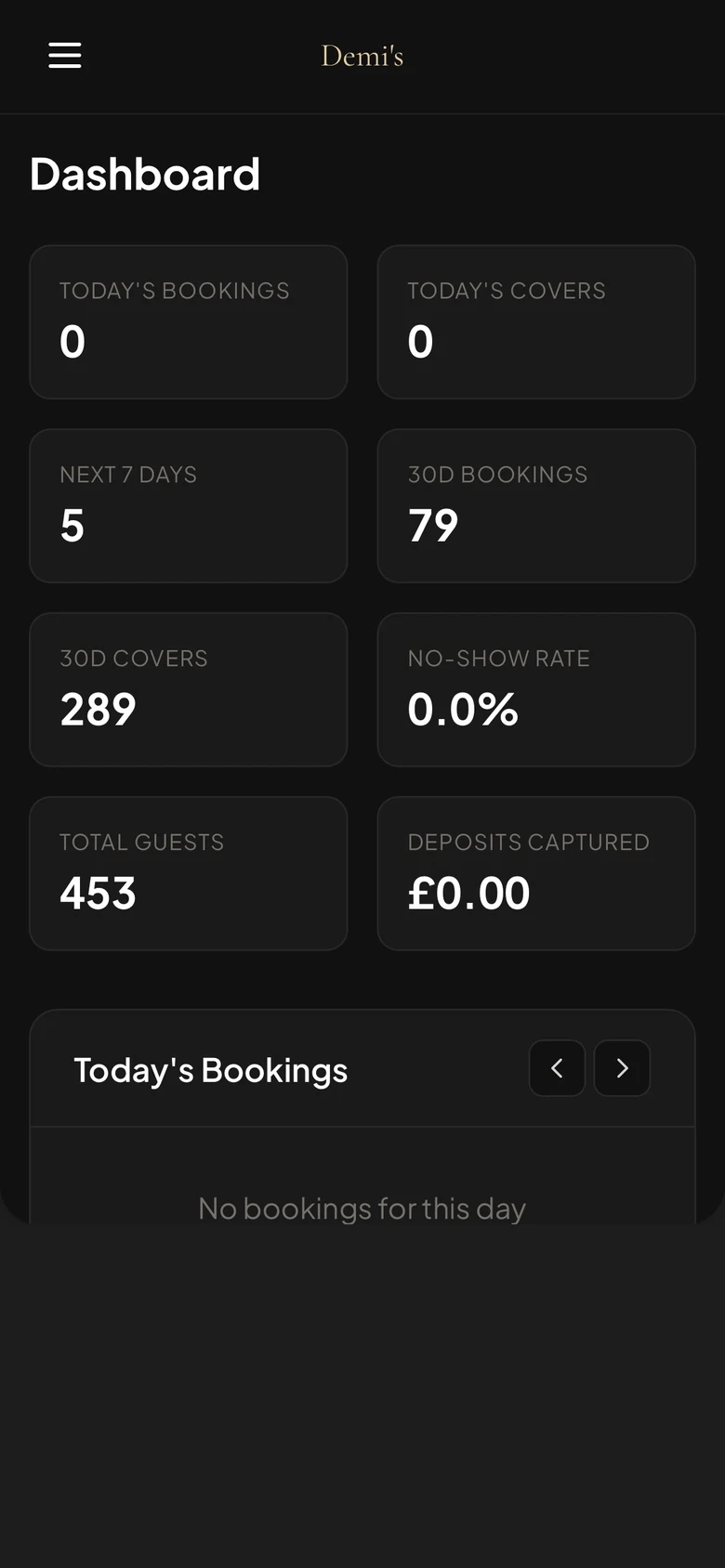
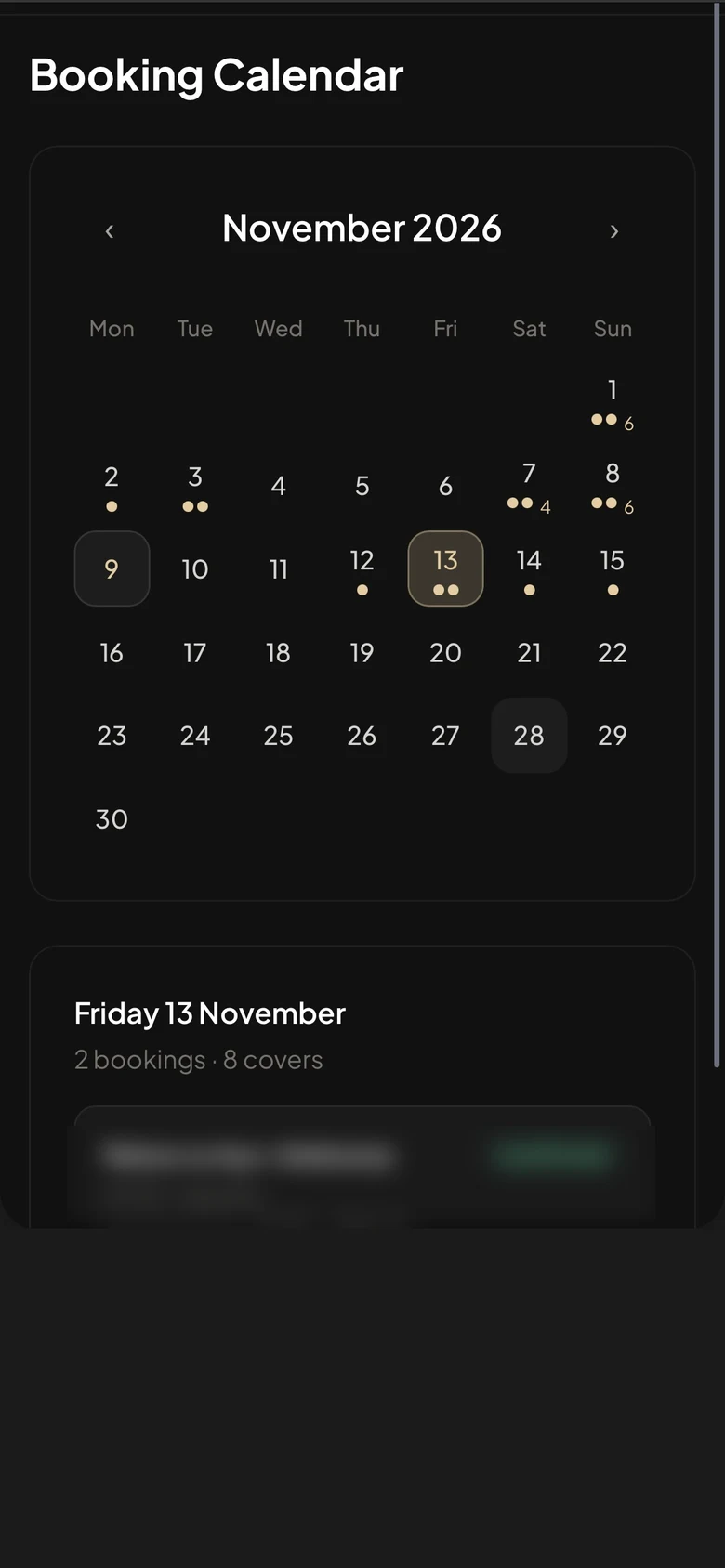
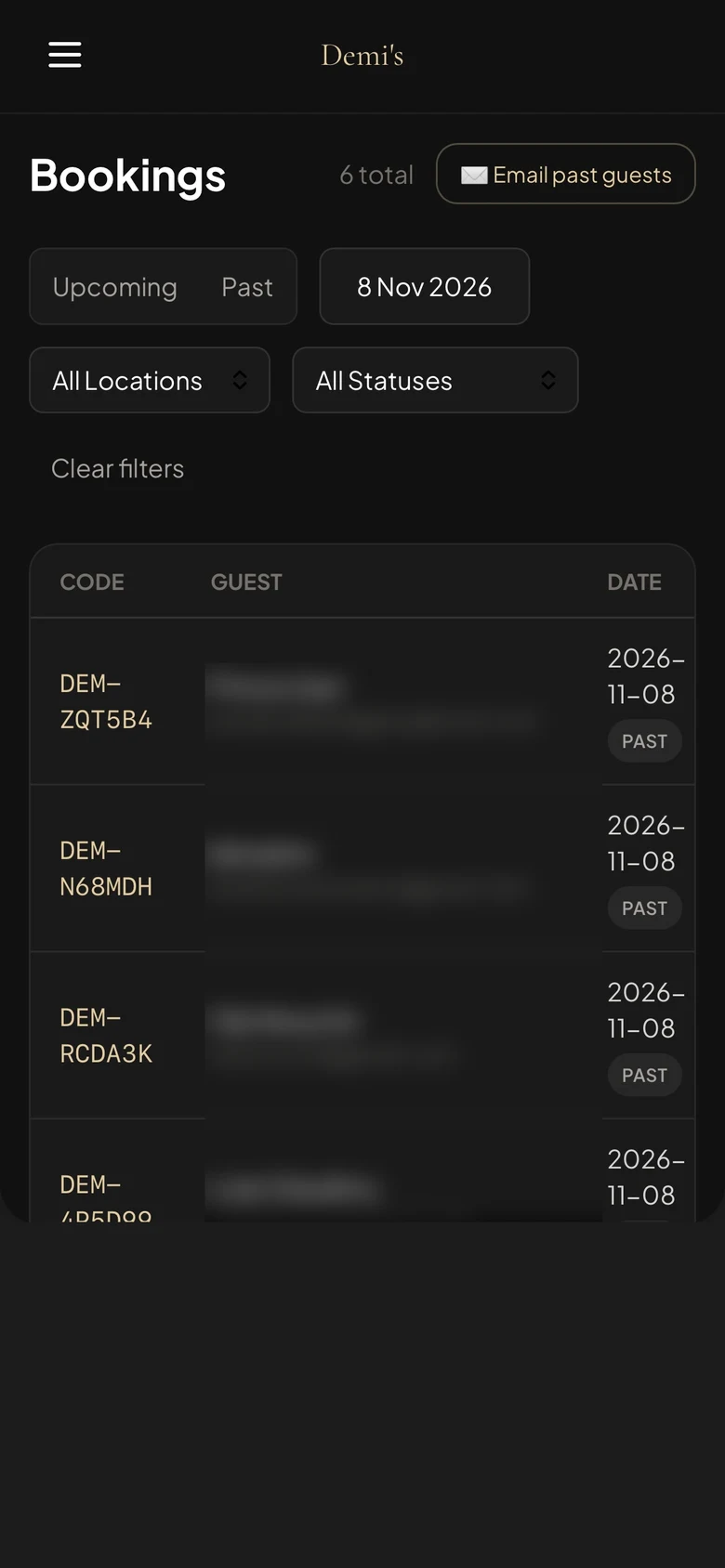
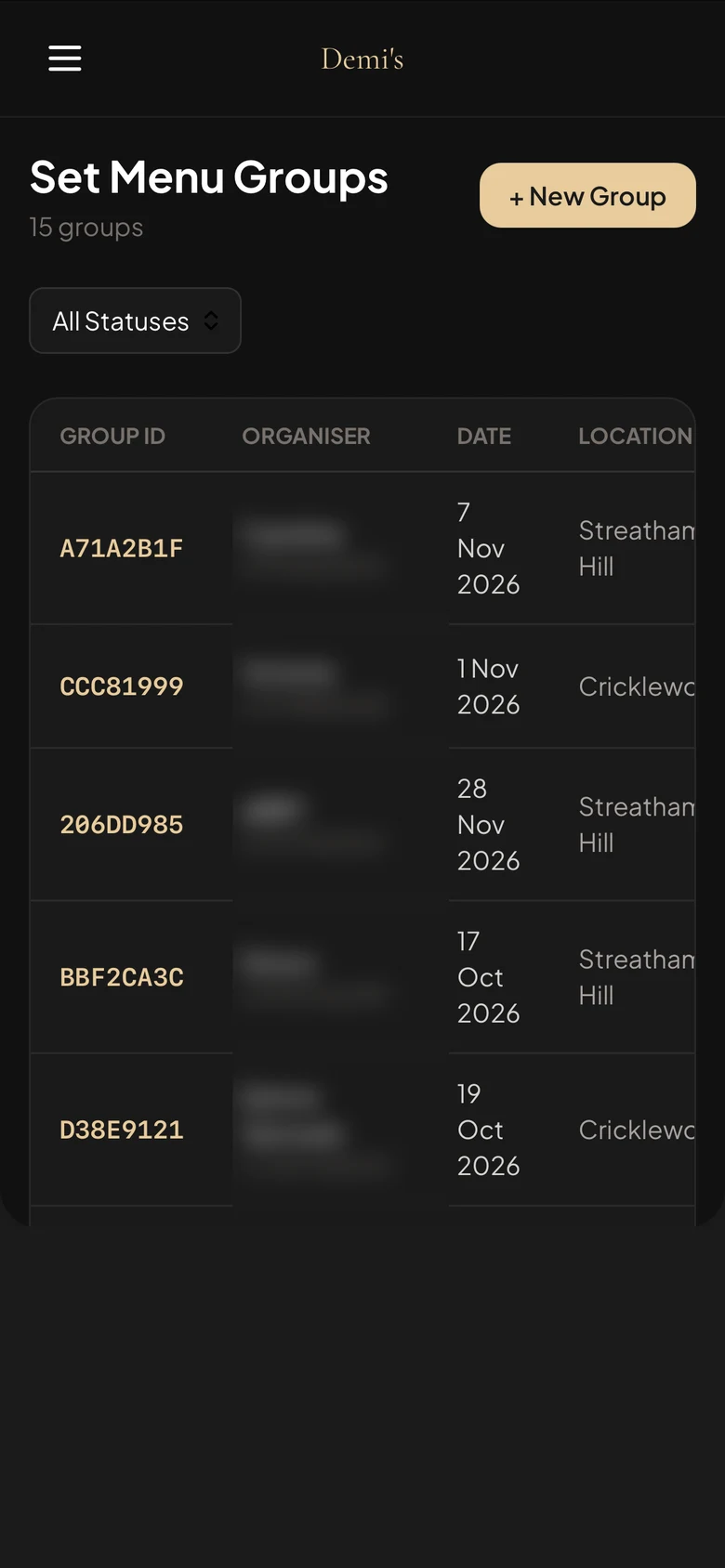
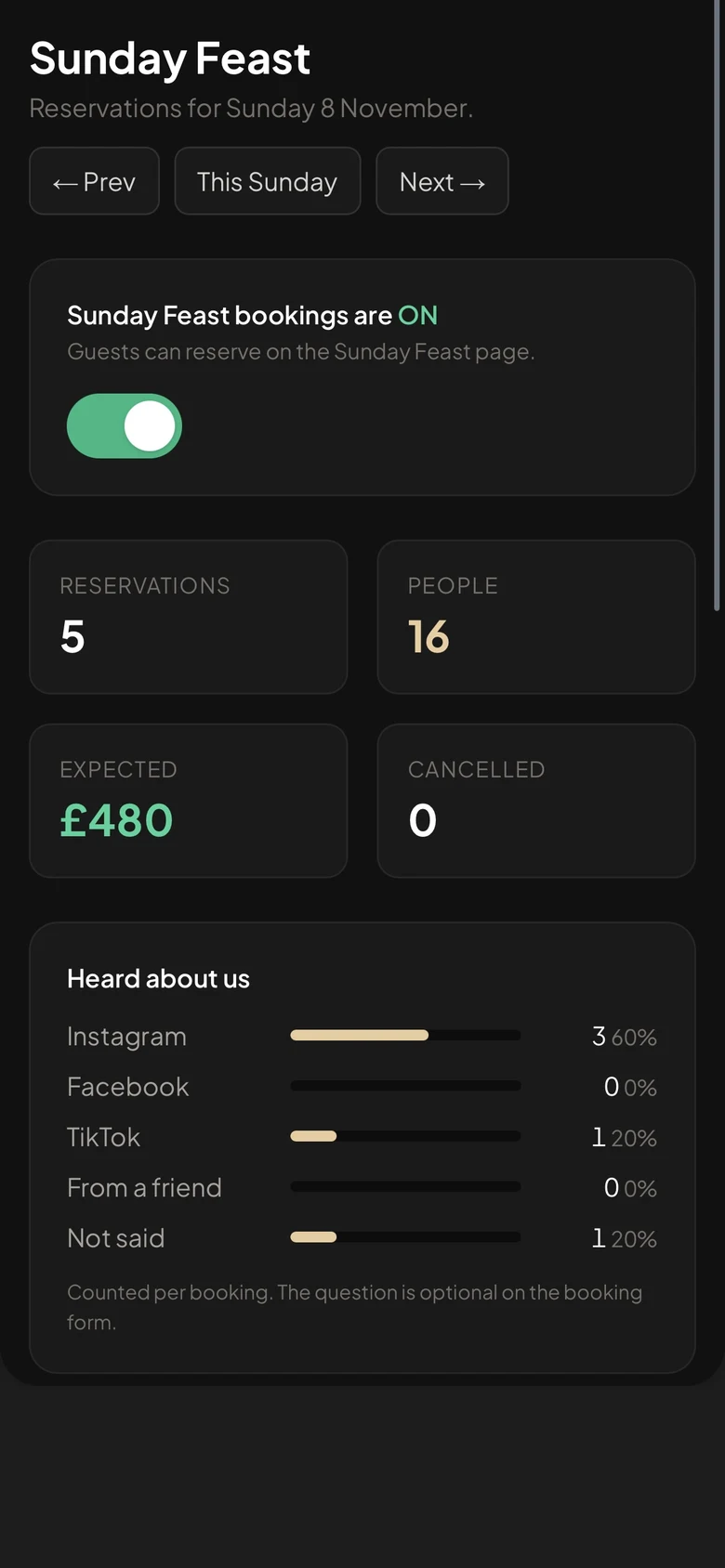
Two sides of the same restaurant. Staff clock in, check the rota and see who’s on shift. The owner sees bookings, covers, takings and what sold at each door, across Cricklewood and Streatham Hill. And it’s still running every day: in the last 30 days alone, 79 bookings and 289 covers came through it.


Scroll sideways for 10 key screens →
From the restaurant’s own records, March to December 2026.
Cutting waste first meant the extra covers from the buffet and brunch turned into profit, not just busier shifts. Tracking every campaign meant the marketing money went where it worked. And the tools are still in daily use.


We knew which offers filled tables, but not which ones built loyalty. Measuring repeat visits earlier would have told us.
Documenting the tools and training someone else on them sooner would have made them less dependent on me.