← All work
Health-tech2025Live · US

TherraHelp

Taking the admin
out of therapy.

99.9%The matching accuracy the brief asked for
app.therrahelp.com · therapist
Patient dashboard
Role
Product Designer, via Isometry Studio
Brief
PRD + MVP feature assessment
Scope
Patient + therapist portals, admin review
Platforms
Web + mobile
Compliance
HIPAA · US + Canada licensing
01
Chapter 01

The problem

Therapists don’t burn out on therapy. They burn out on everything around it: juggling bookings across time zones, writing up notes between back-to-back sessions, and piecing a patient’s story together from five different places. Patients have their own version of it. They fill in forms, wait, and too often end up with someone who isn’t the right fit.

TherraHelp came to my studio, Isometry, with a clear brief from their product manager: an MVP that takes the admin off therapists so they can focus fully on therapy, and matches patients to therapists with 99.9% accuracy. It listed 13 features, each scored on user value, business impact and dependencies, then split into a 3-month V1 and a V2. My job was to turn that PRD into flows and dev-ready screens for patients and therapists, on web and mobile.

If the admin disappears, the therapist can be fully present. That was the whole job.

02
Chapter 02

What the brief asked for

01Match patients with 99.9% accuracy
02Take the admin off therapists
03AI session notes within 2 minutes
04One chart per patient, for their therapist only
05HIPAA everywhere, from sign-up to payout

13 features scored · 9 core for the MVP · a 3-month build plan · 5 saved for V2

03
Chapter 03

Who I designed for

The brief named two users, therapists and patients, and they want very different things from the same moment. A patient wants to feel seen. A therapist wants to get to the session without the admin in the way. So every flow I designed had two ends, and the patient side split again for couples and children.

Therapist portal · web + mobile

Therapists

Want to spend their time on therapy, not on admin.

Needs
  • Working hours, availability and bookings in one calendar
  • An AI summary ready within 2 minutes of a session
  • Every patient’s story in one chart
Edge cases I designed for
  • An application that gets denied
  • A licence that expires mid-caseload
  • Switching to “not taking patients”
Individuals + couples · web + mobile

Patients

Want the right therapist, then to just show up.

Needs
  • A short questionnaire, not an intake interview
  • An honest match, or the closest options
  • Reminders, rescheduling and payment that just work
Edge cases I designed for
  • Waiting for a match with booking locked
  • Cancelling inside 24 hours
  • Leaving onboarding halfway
Parent-led or independent · web + mobile

Guardians + children

Want to set up therapy for a child, safely.

Needs
  • A matching flow written for guardians
  • Child-friendly dashboards and sessions
  • Clear rules on who sees what
Edge cases I designed for
  • Children without their own email
  • Switching between accounts
  • Consent and privacy
And behind them

An approval gate that protects everyone.

Therapists apply like a smart CV: bio, licences and the states they practise in. An admin approves, or denies with a reason, before anyone gets into the portal, so patients are only ever matched with someone verified.

04
Chapter 04

Key decisions

A PRD tells you what to build. It doesn’t tell you how it should feel. These are the calls I made turning requirements into screens.

Matching that shows its working

Matching that shows its working

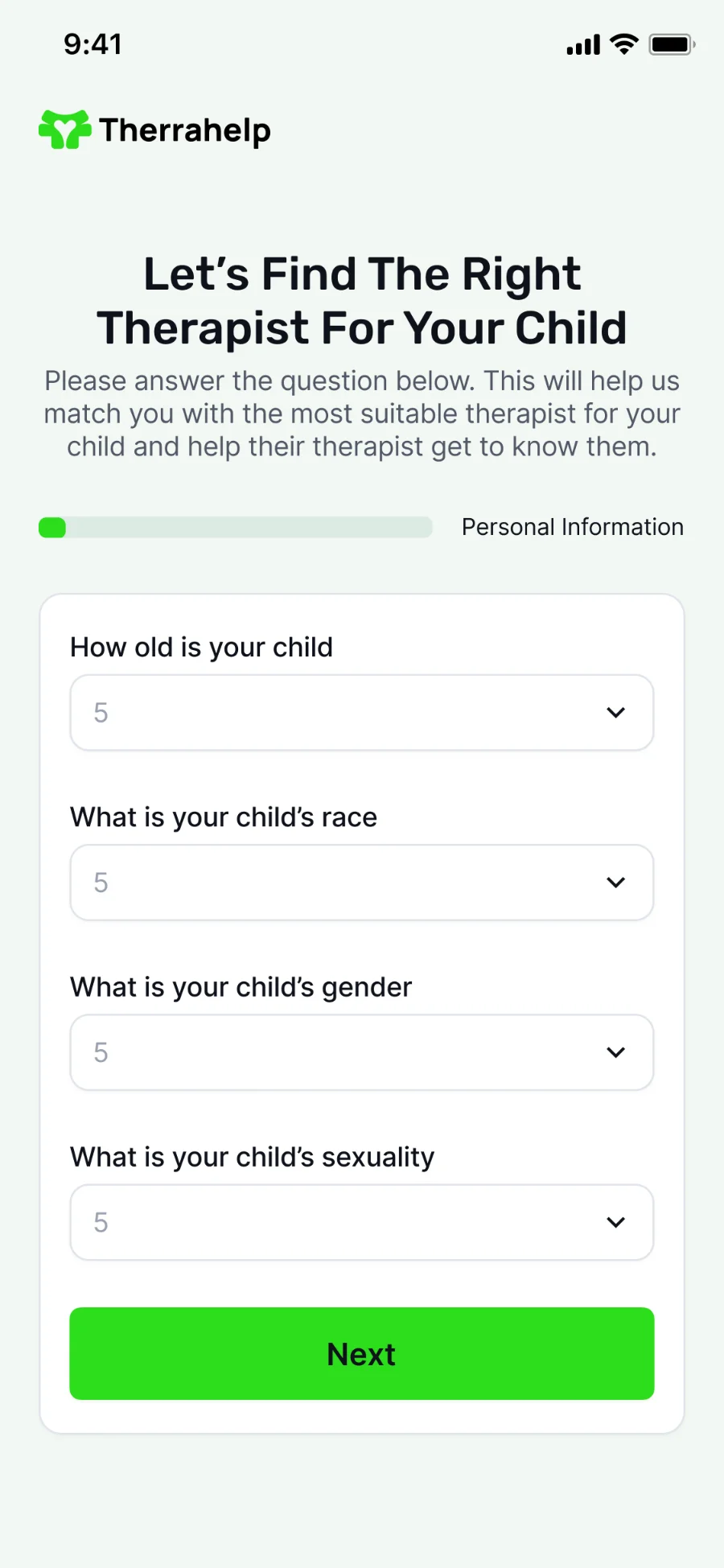
The questionnaire is 5 to 10 questions on goals, history, preferences and language, and must-haves carry the most weight. When there’s no perfect match, patients see the closest options instead of a dead end. Booking stays locked until a therapist is assigned, so I designed that wait as a chance to explore the portal, not a blank screen.

Screenshot · A calendar that does the maths

A calendar that does the maths

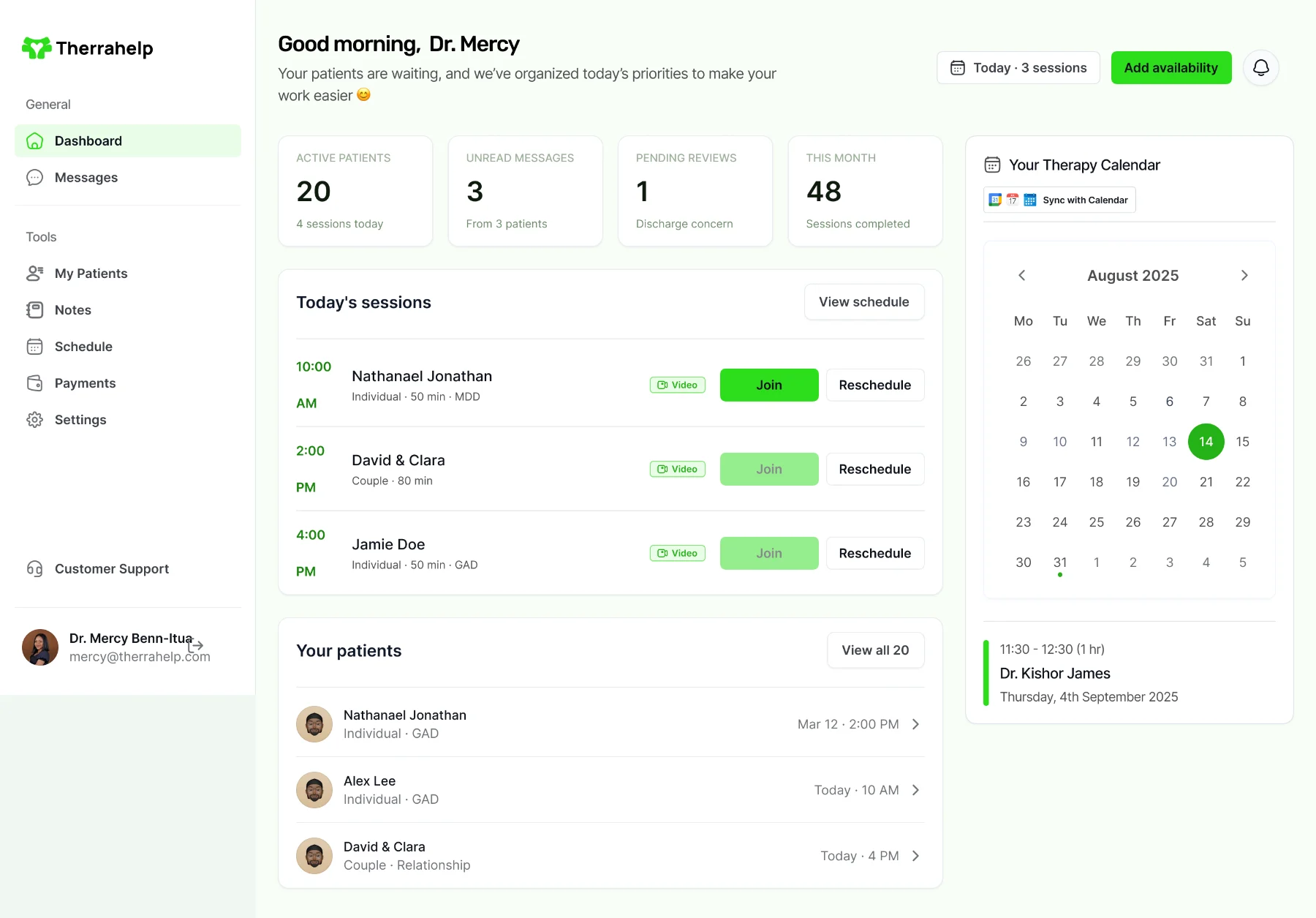
Therapists set their working hours, weekends included, and the calendar handles time zones, so patients only ever see slots that are really free. Reminders go out 1 hour, 30, 15 and 1 minute before, and the 24-hour cancellation rule shows before anyone books, not after.

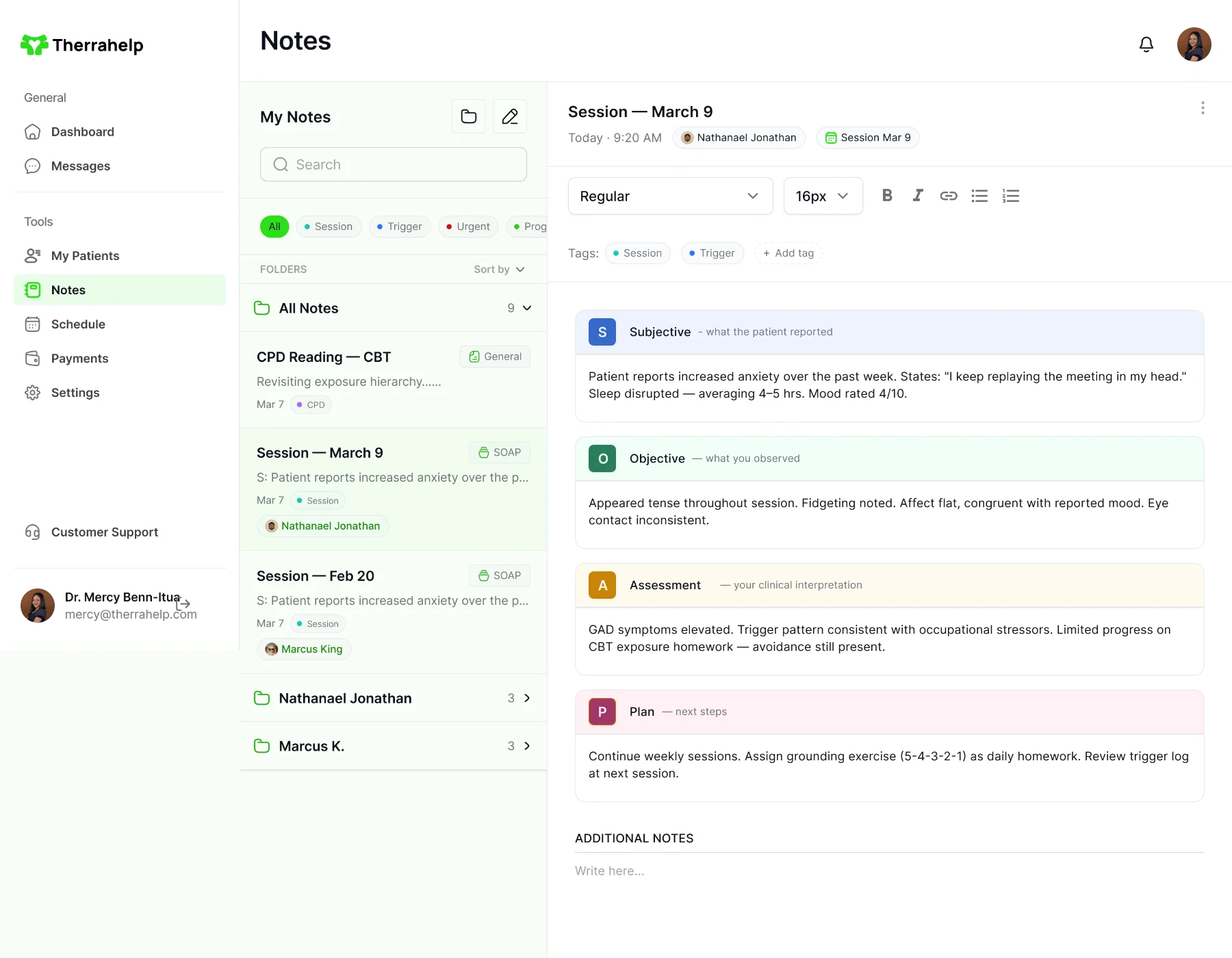
Screenshot · Notes that write themselves, but never overwrite you

Notes that write themselves, but never overwrite you

An AI notetaker joins the session, tells patient and therapist apart, and drafts a summary within 2 minutes. It never overwrites a therapist’s edits: they work on a copy, and every note is tagged by author and date in the patient’s chart.

One chart, one story

One chart, one story

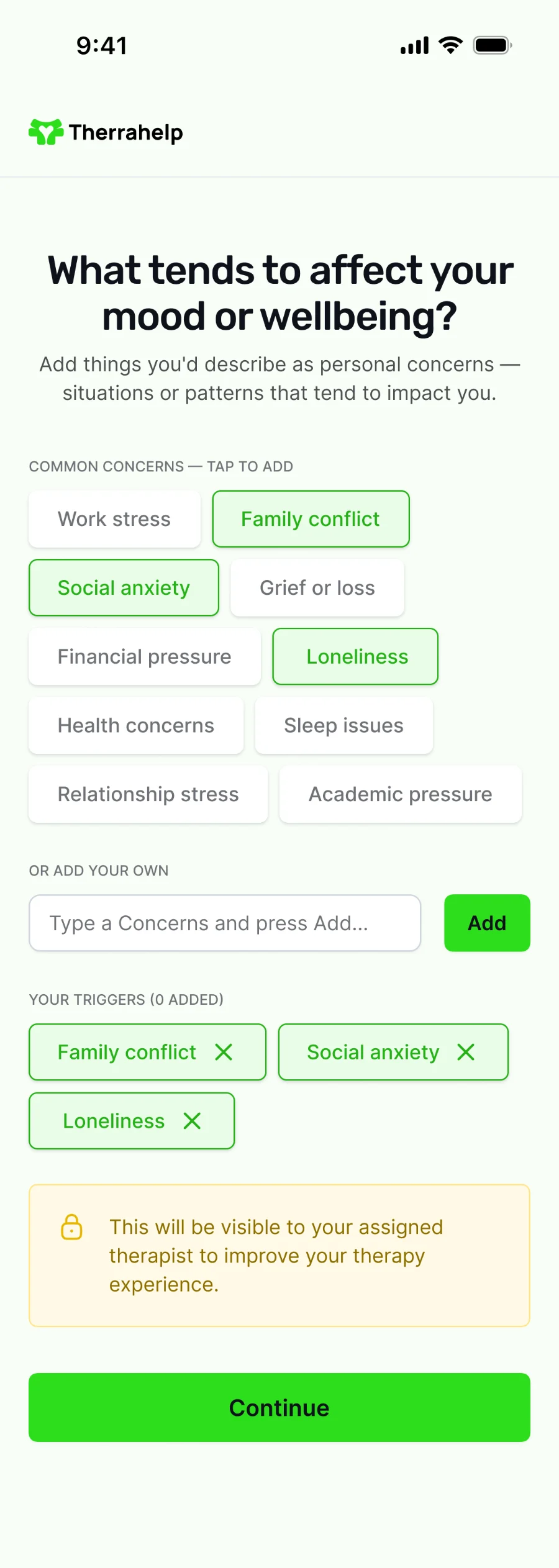
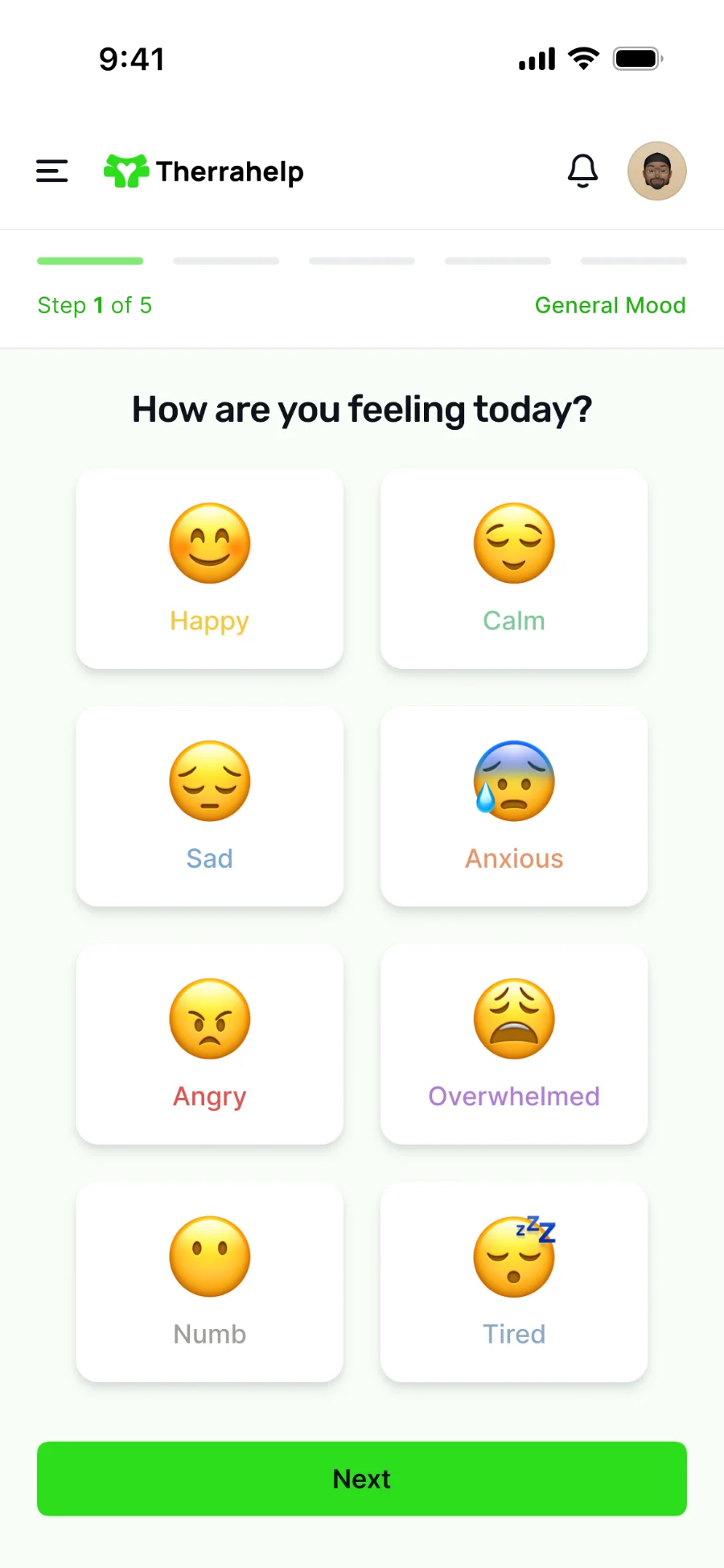
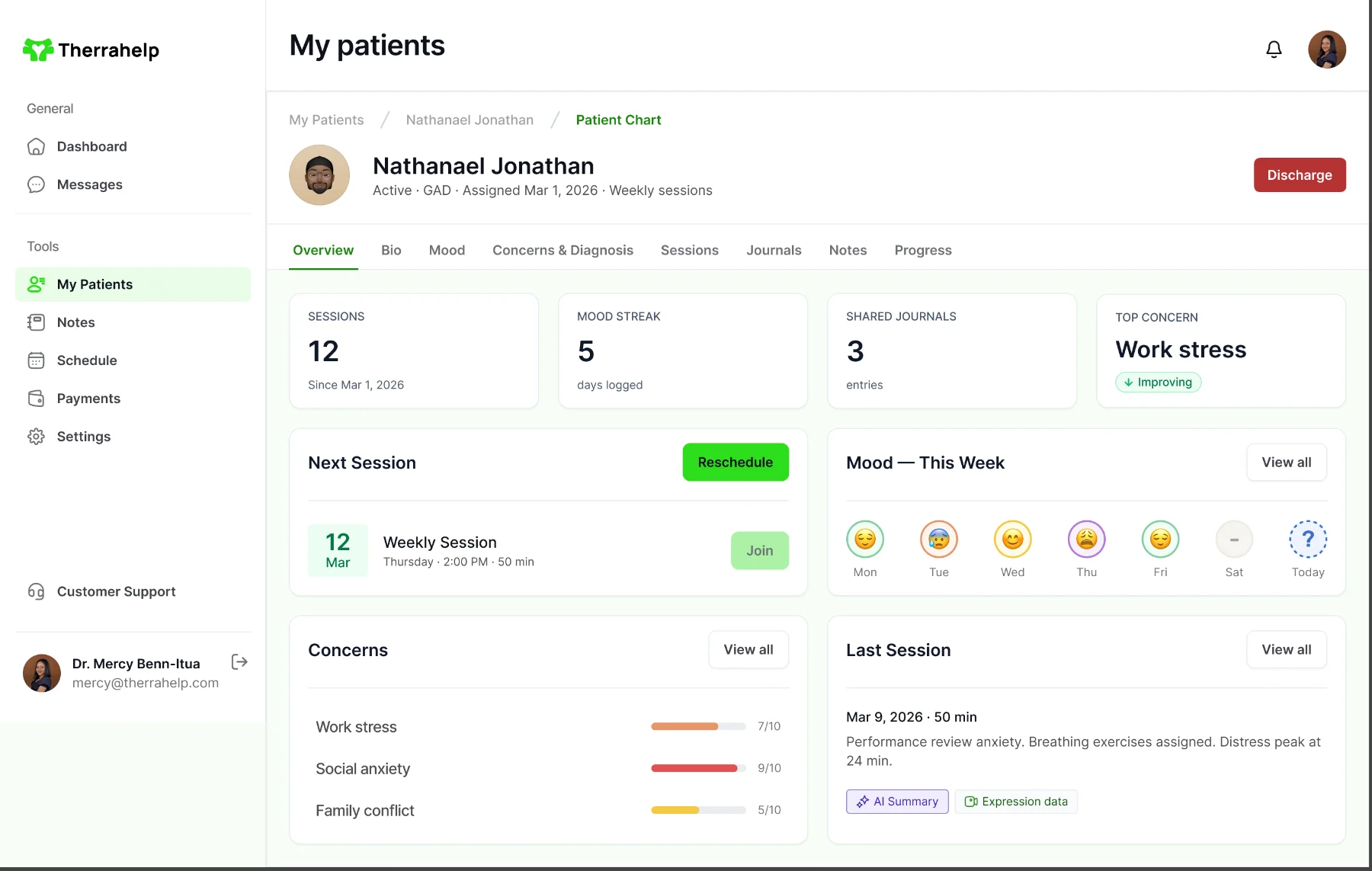
Bio-data, concerns, the progress graph, session notes and appointment history all live in one chart that only the assigned therapist can open. The brief called them triggers; on the patient side I called them concerns, because clinical words can be activating. Patients rate each one daily, and the graph turns those check-ins into a trend.

05
Chapter 05

What shipped

Patient
app.therrahelp.com
Therapist
app.therrahelp.com

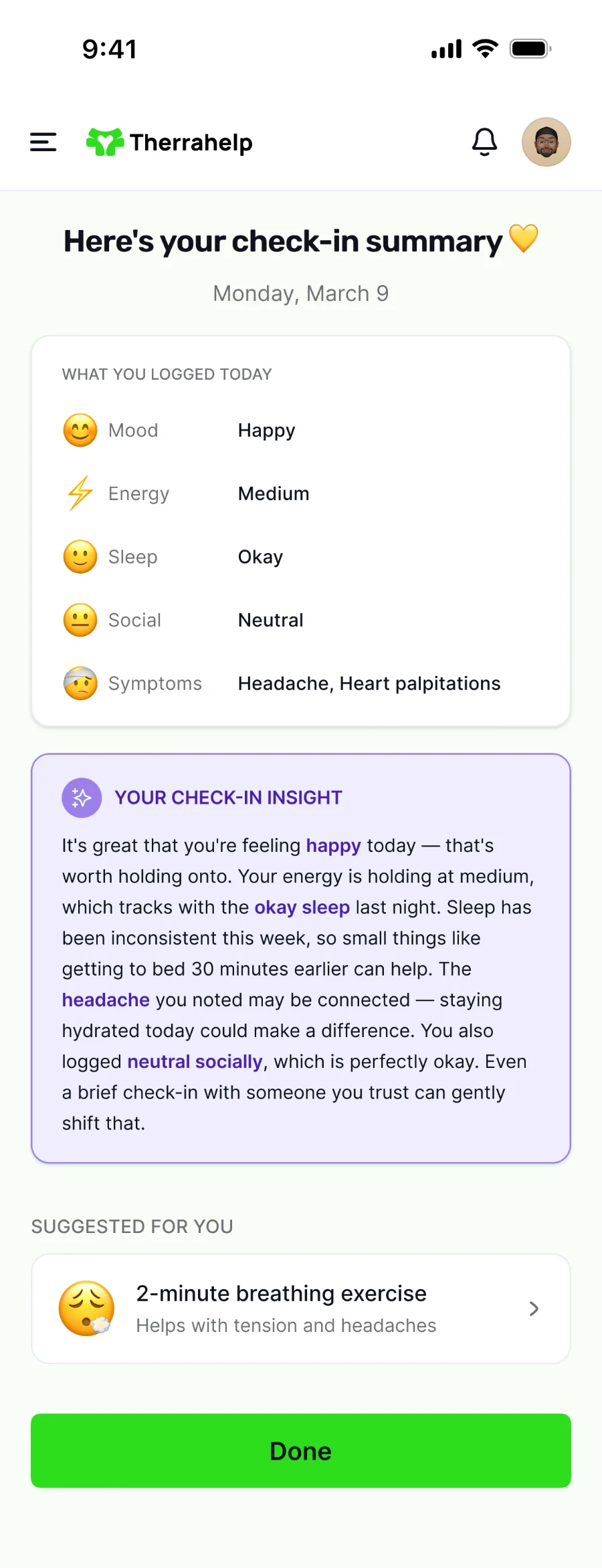
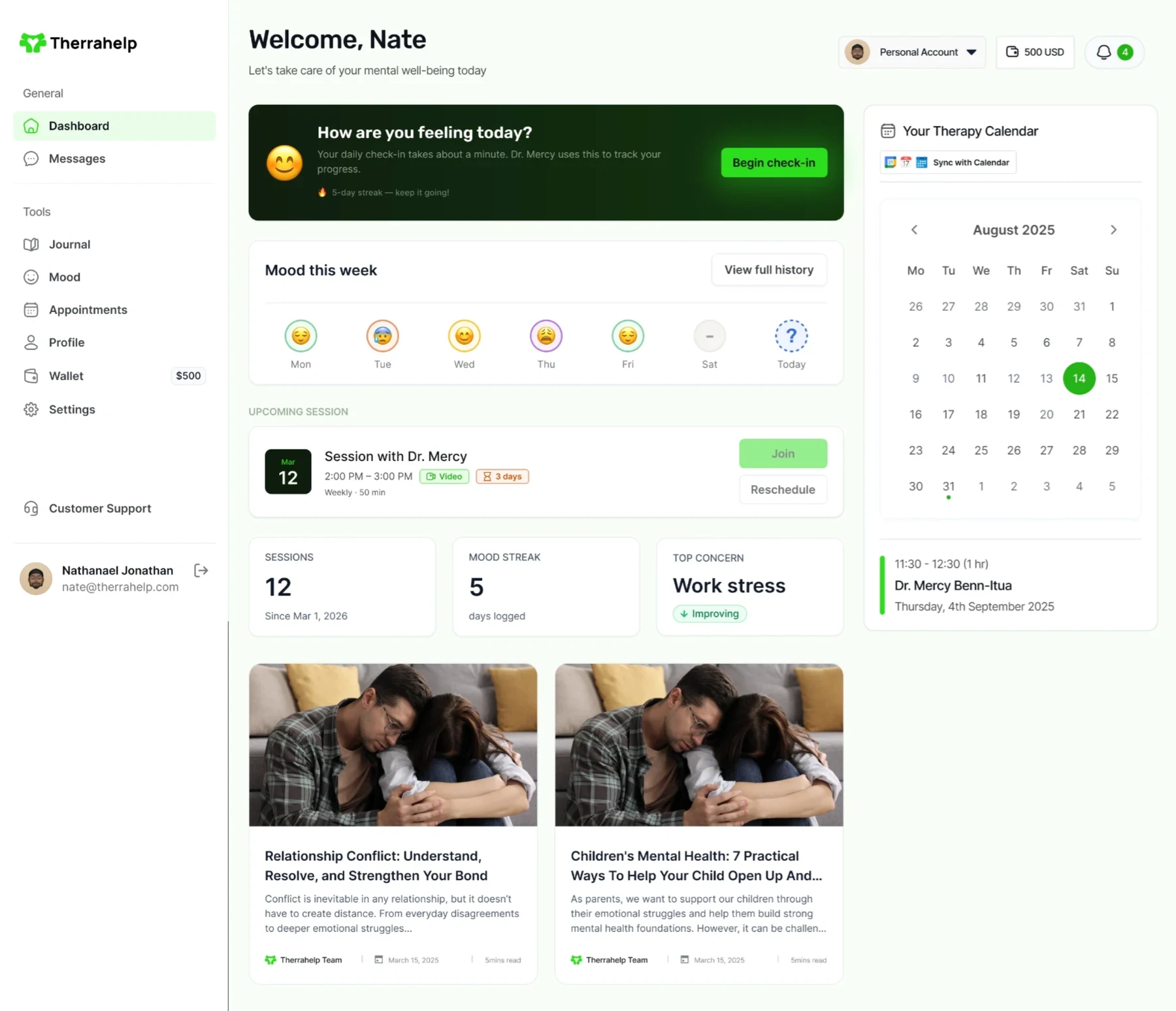
One record, two lenses. Patients see their sessions, mood and progress in plain, kind language. Therapists see the same data as a clinical chart, with SOAP notes and a case report.

Child matching
Child matching
Concerns, not triggers
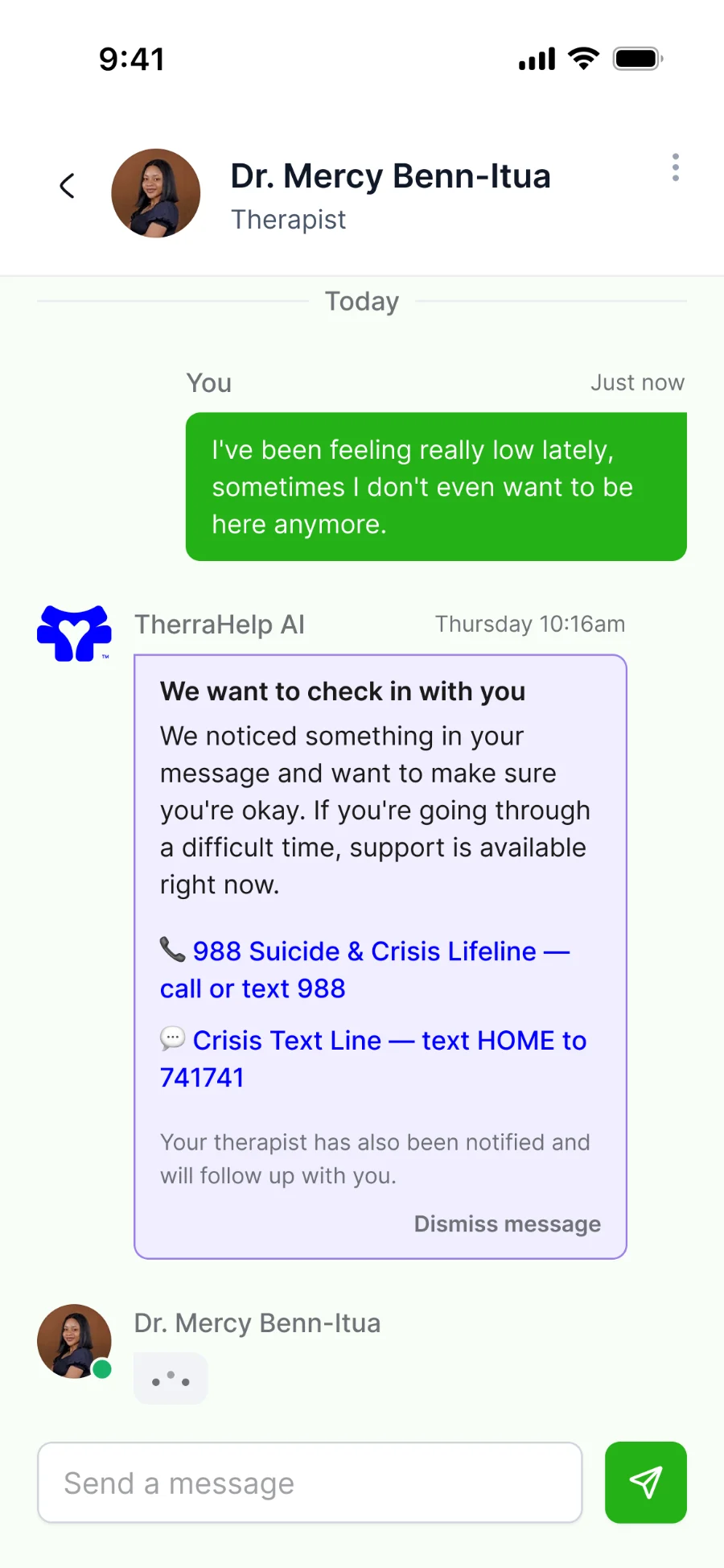
Risk flag + helplines
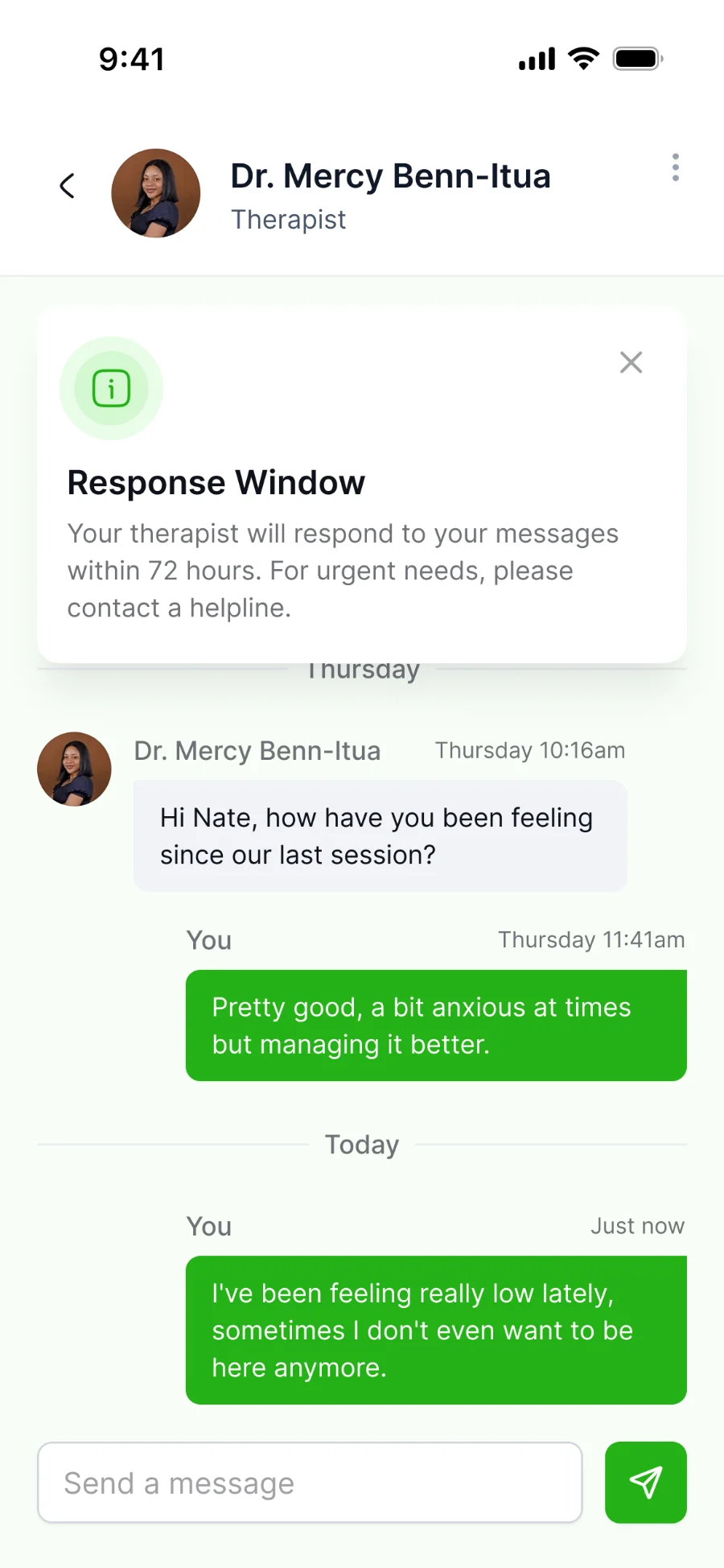
72-hour reply window
Mood check-in
Mood check-in
Check-in summary
Check-in summary
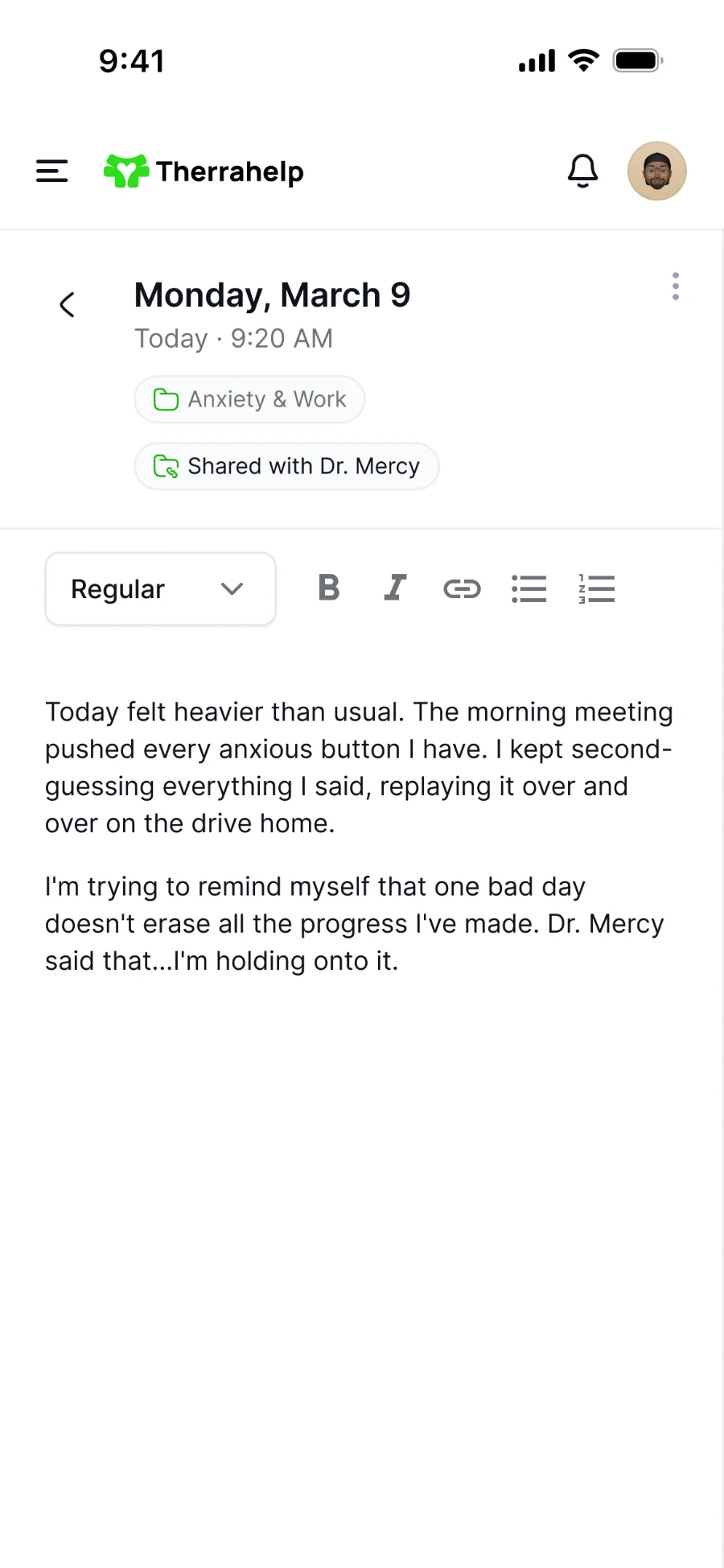
Private journal
Private journal
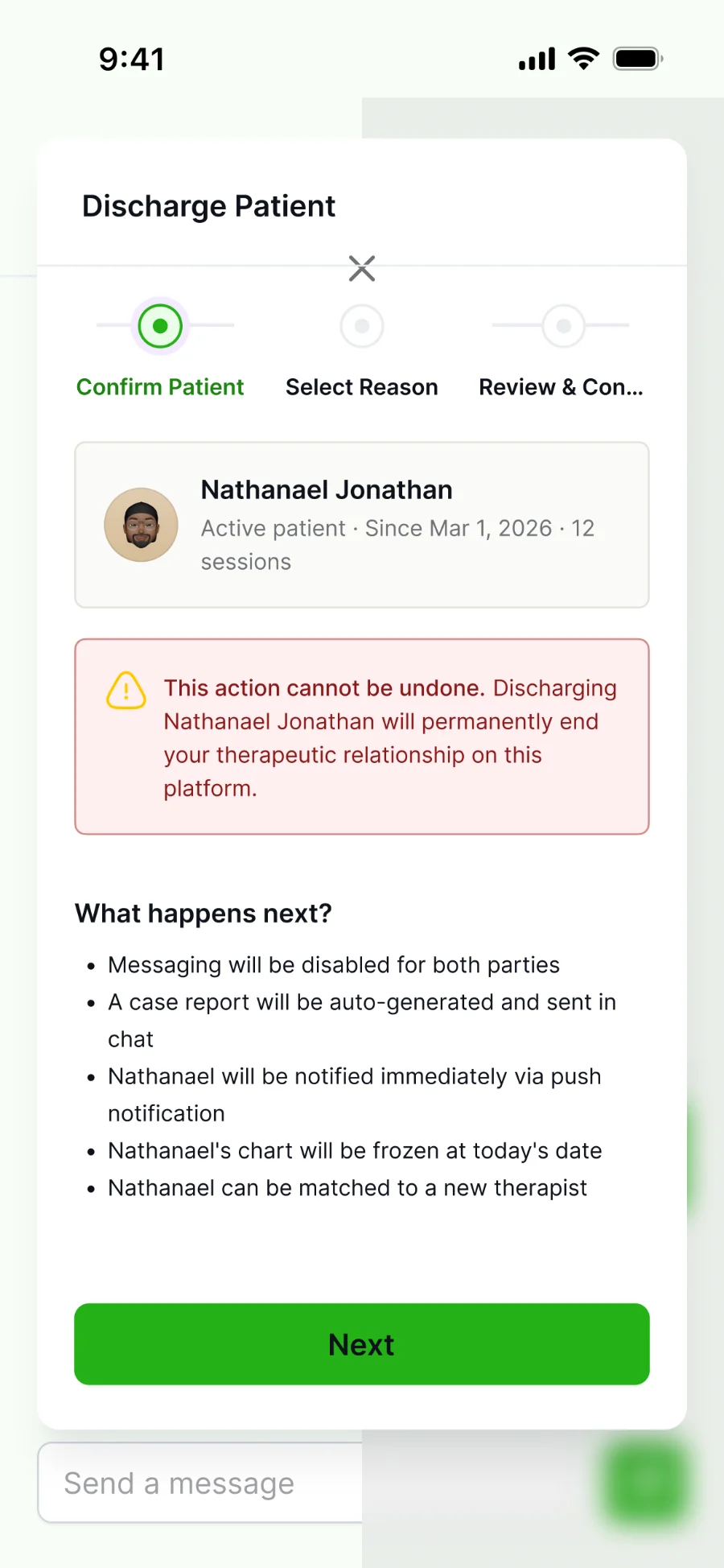
Discharge, with a say

Scroll sideways for 8 key screens →

06
Chapter 06

The impact

13Features scoped and prioritised
9Core features in the MVP
30+Dev-ready screens

These are scope figures, not outcomes. TherraHelp is newly live, so instead of claiming results I haven’t got yet, here’s what I’d measure.

What I’d measure next

Did the admin actually disappear?

The brief made two promises: near-perfect matching, and less admin for therapists. So that’s what I’d track: how often patients stay with their first match, time from sign-up to first session, how many AI summaries therapists keep with light edits, and minutes of admin per session.

Photo · patient chart
patient chart
Photo · risk flag in messages
risk flag in messages
07
Chapter 07

What I’d do differently

01

Turn acceptance criteria into states early.

Every “should” in the PRD hid an empty, error or waiting state. Mapping those first saved rework once engineering started.

02

Agree what 99.9% means.

A match-accuracy target needs a definition everyone can test. Next time I’d pin that down with the PM and engineers before designing the results screen.